Many paths, little guidance
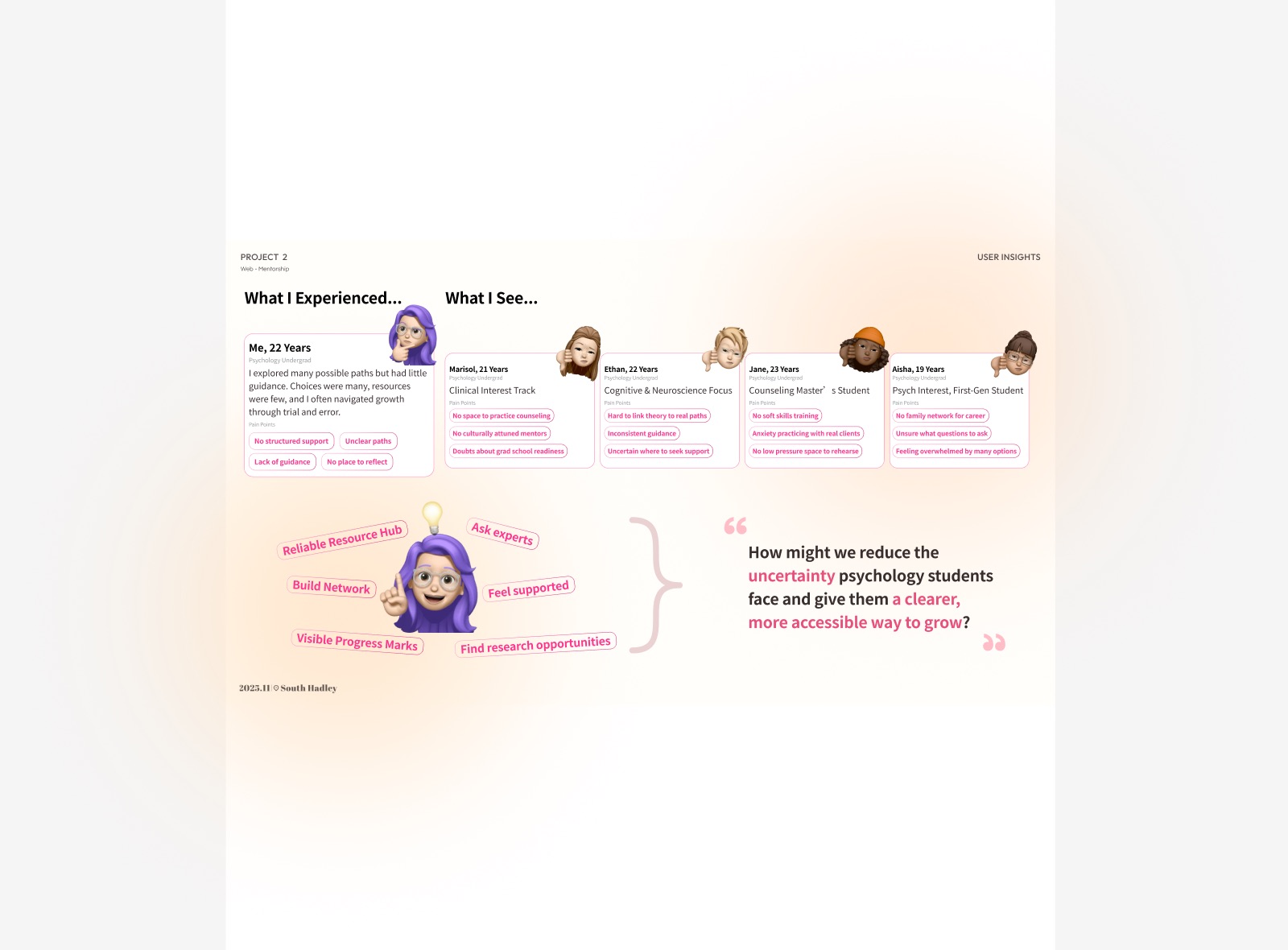
I started from my own experience as a psychology undergrad. I had many options, few resources, and learned mostly by trial and error. Interviews with four other students showed the same gaps: unclear paths, no safe place to practice, and no network for career advice.
Professors and students agreed: AI should help students think, not think for them
Research shows that psychology curricula are fragmented (Halonen & Dunn, 2018) and that structured mentorship builds confidence and professional identity (Crisp & Cruz, 2009). I interviewed three professors and three students.
Clarity on skills
Students don’t know what they’re good at or which questions to ask.
Low-stakes practice
They want a safe place to try, fail and learn before working with real clients.
Human judgment stays
AI should support training, not replace it.
Three mentors students already look for
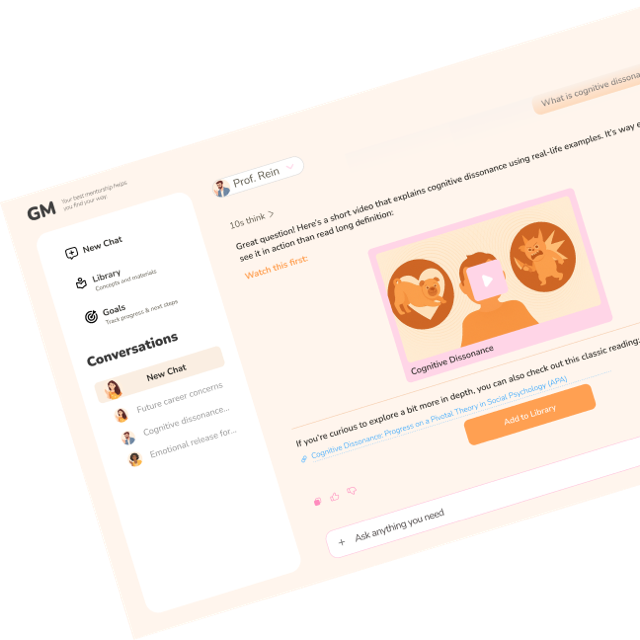
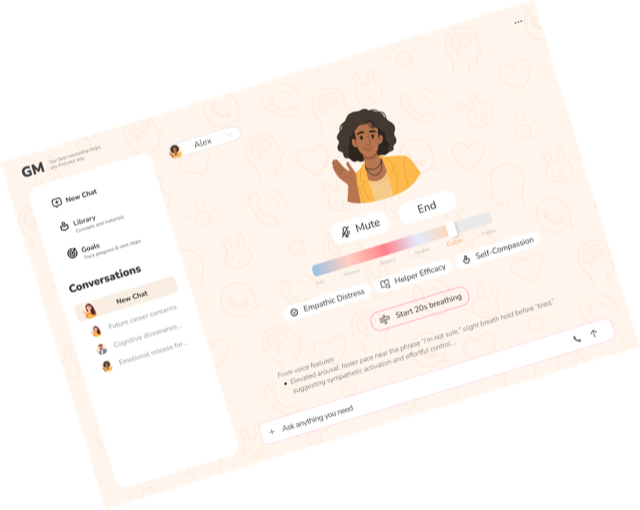
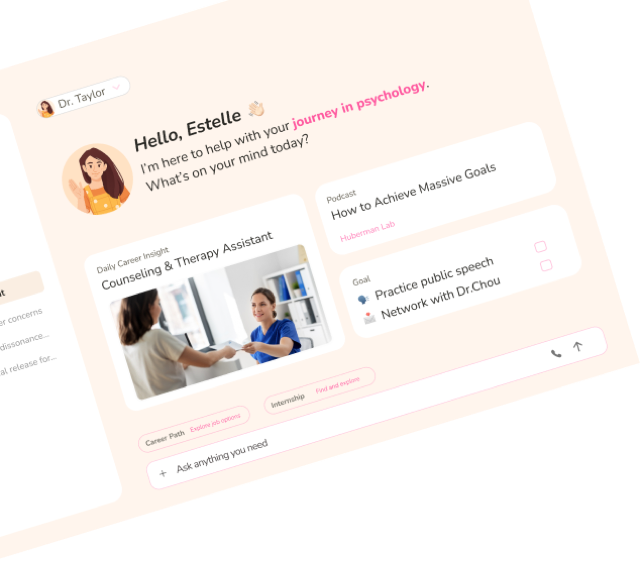
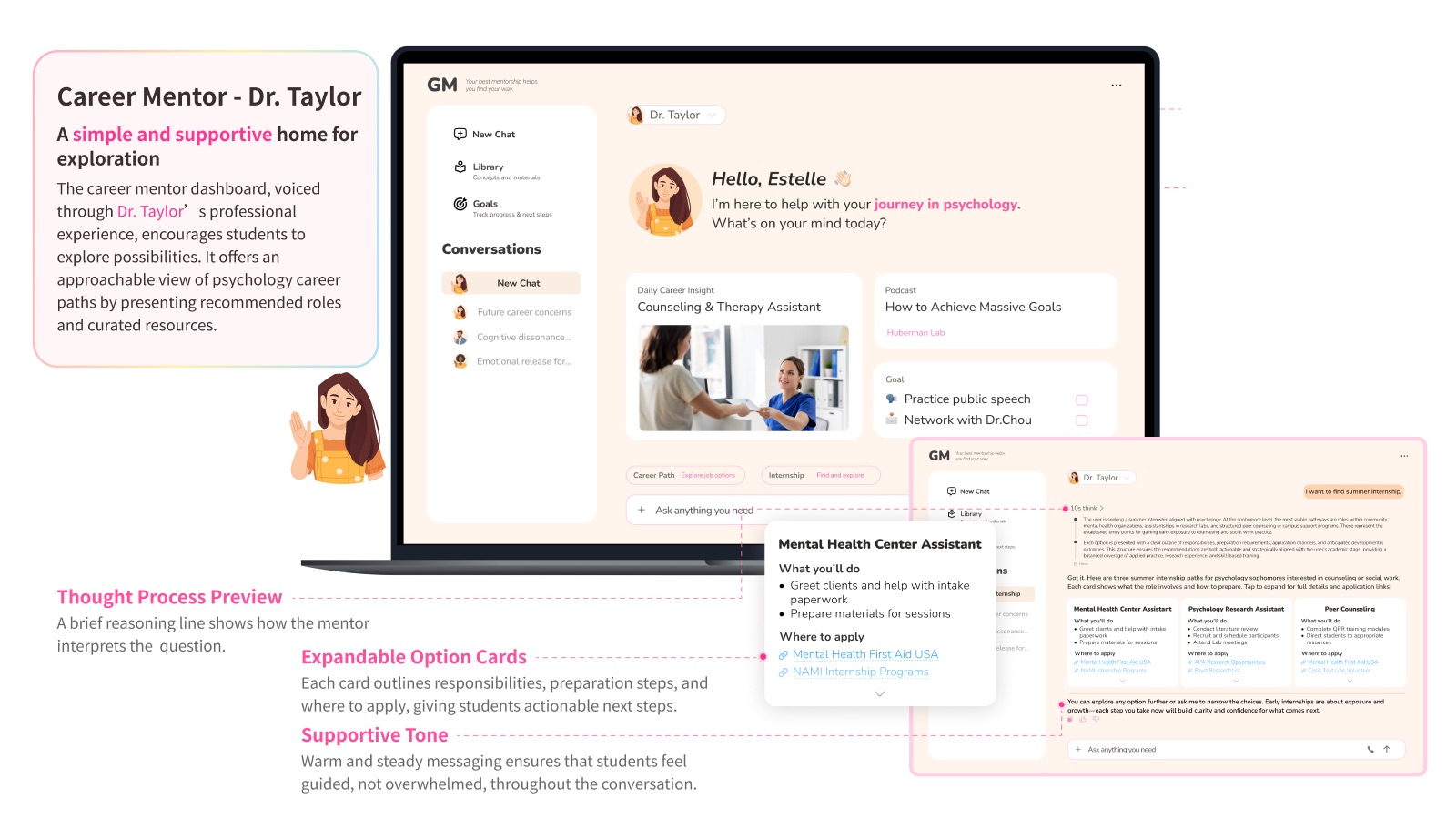
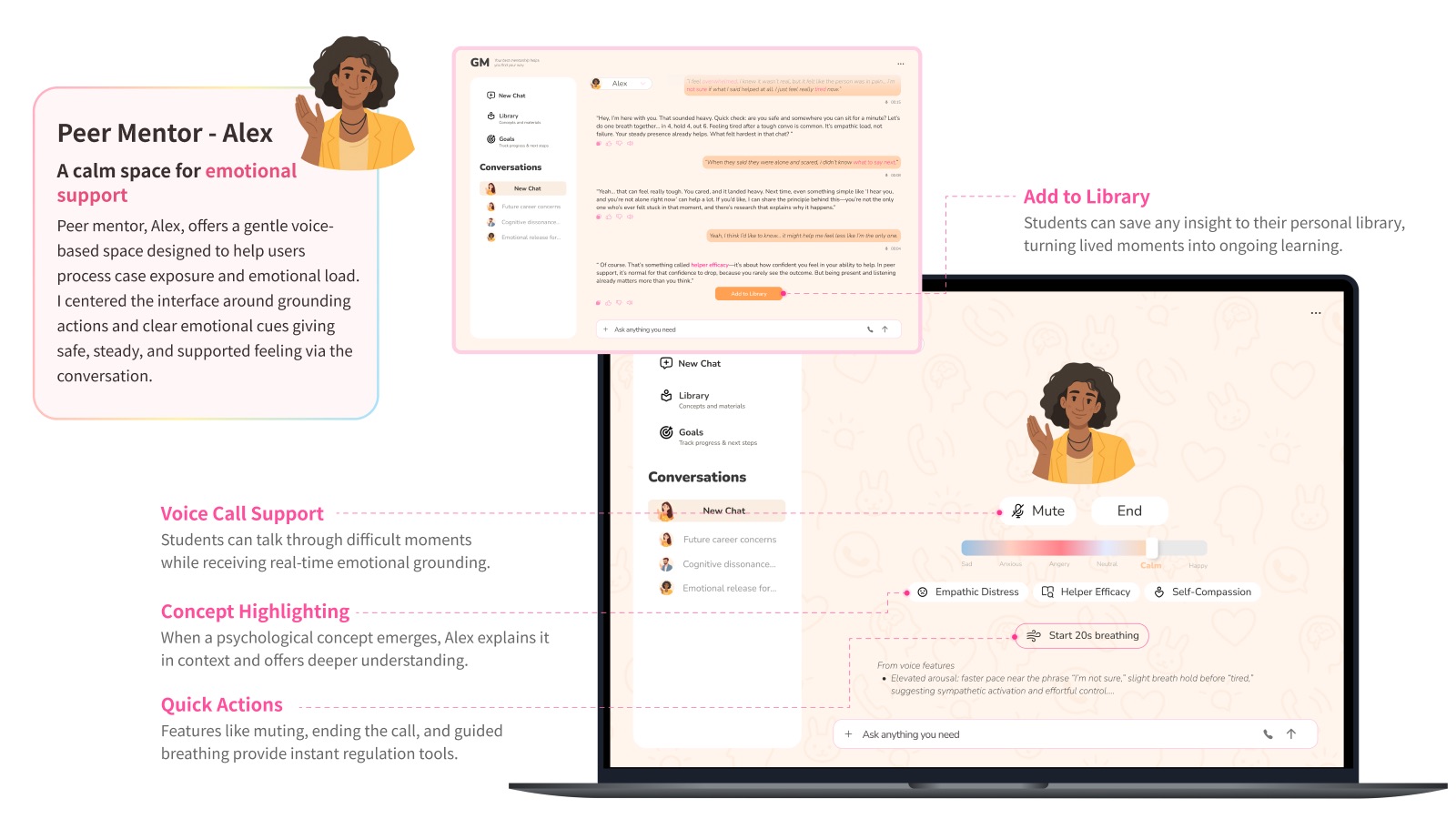
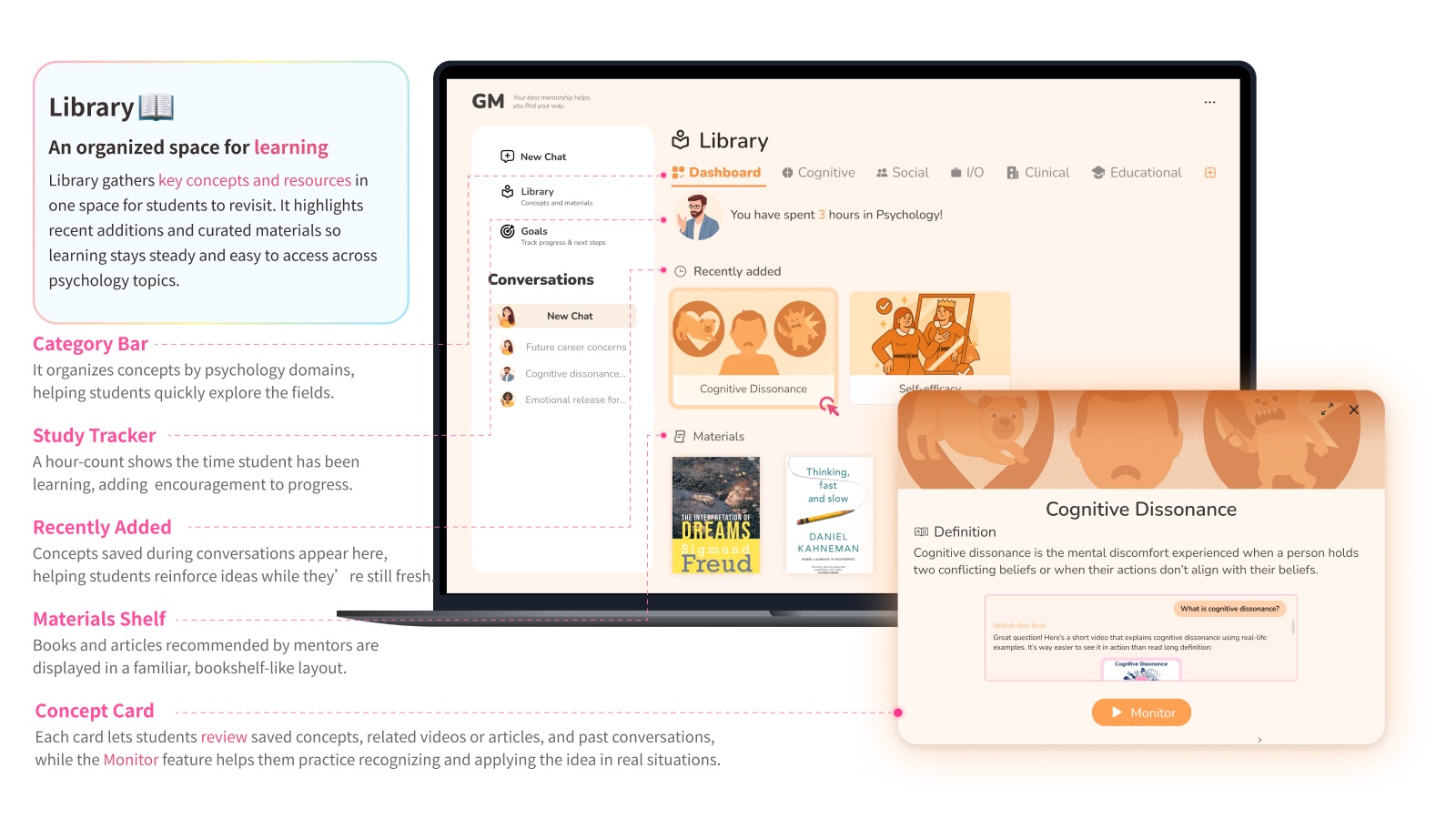
Each AI mentor fills a type of support students need but often can’t reach. Responses adapt to the student’s history, so the guidance feels specific rather than generic.
Explore paths
Role cards with responsibilities, preparation steps and where to apply. A short reasoning line shows how the mentor read the question.
Process difficult moments
A voice space with real-time emotional grounding, explanations of concepts as they come up, and quick tools like guided breathing.
Keep what you learn
Concepts saved from conversations, materials recommended by mentors, and a study tracker in one place.
What usability testing changed
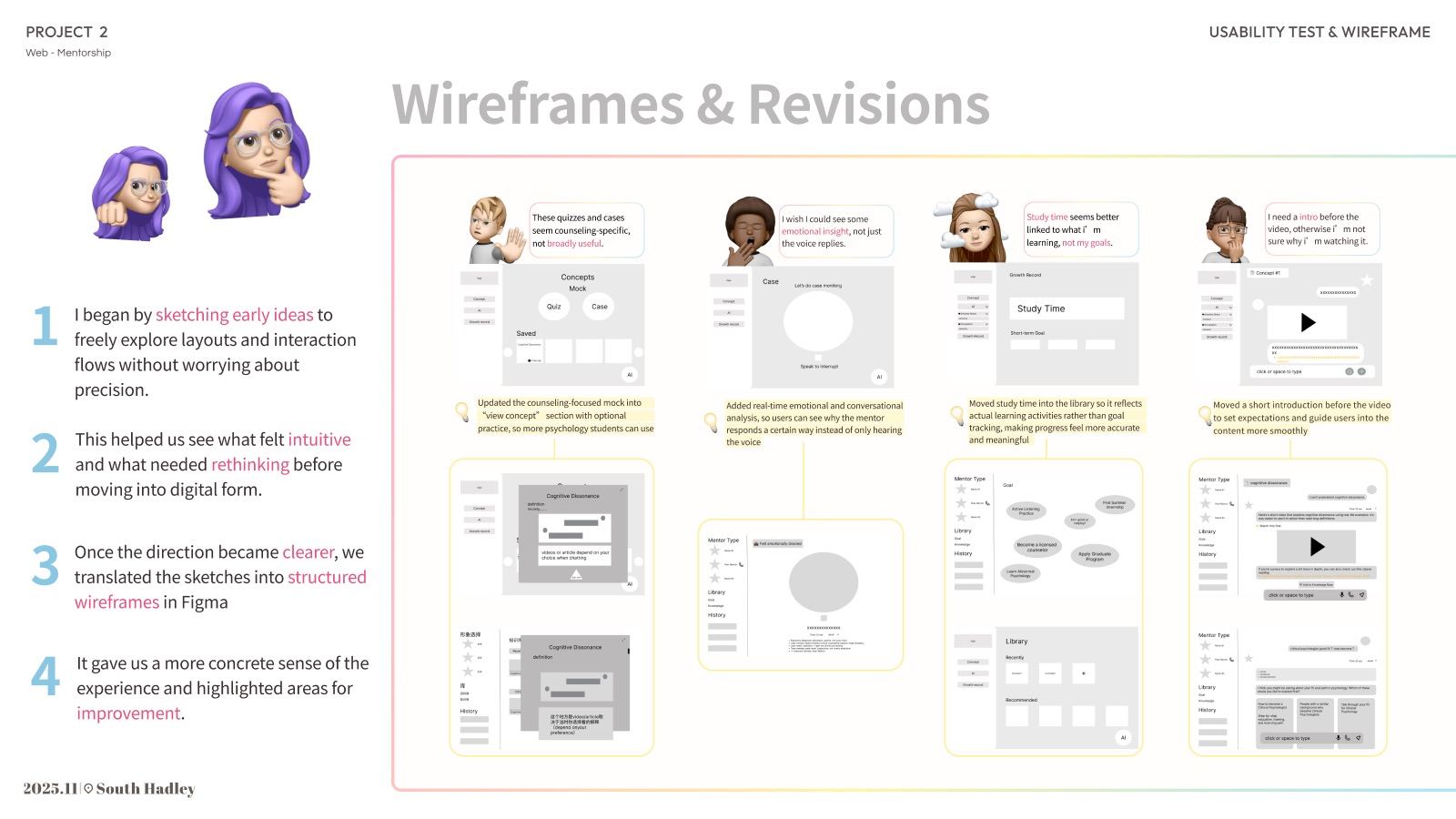
I moved from paper sketches to wireframes in Figma and tested them with students. Four changes came out of that round:
- Quizzes and cases felt specific to counseling students→Became an optional “View Concept” practice that works for any psychology student
- Users only heard the mentor’s voice reply→Added live emotional and conversation analysis that shows why the mentor responds as it does
- Study time sat under goals→Moved study time to the Library, where it tracks real learning activity
- Videos started without context→Added a short intro before each video to set expectations
What I learned
Students valued clarity and structure more than conversation that felt novel. The AI was most helpful when it explained its reasoning, pointed out skills and helped students ask better questions. When guidance felt generic, trust dropped.
Next: test GrowMind with students over a full term to measure its effect on confidence, the quality of their questions and reliance on AI, then design transitions that move students from guided reflection toward independent judgment.